
PSYCH-K® facilitation for How does PSYCH-K® work?
PSYCH-K® guides

How does PSYCH-K® work?

The simple version: find the belief, check it is okay to change, then help your subconscious accept a new one you choose.

You’ll work with Rebecca Smith

A PSYCH-K® Centre International Facilitator who guides every session personally.

In person or online

Visit us at Norwest Wellbeing, or meet on Zoom from anywhere in Australia.

Think of PSYCH-K® as a conversation with the part of your mind that runs habits and automatic reactions. Muscle testing is used like a yes/no signal. Short processes called balances are used to help a new, self-chosen belief settle in. You stay fully awake the whole time.

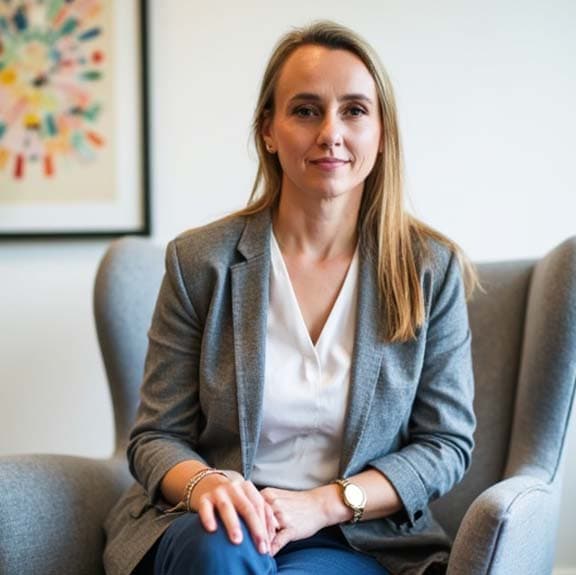
Headshot of Rebecca Smith

PSYCH-K® Centre International Facilitator

5.0(72 reviews)

Specialises in:

Advanced PSYCH-K® CertificationMaster Level FacilitatorHealth & Wellbeing Specialist

Rebecca uses PSYCH-K® to help you rapidly transform the subconscious beliefs that keep you stuck, creating breakthrough results in relationships, health, confidence, and life direction.

Rebecca's advanced PSYCH-K® certifications allow her to address complex belief patterns that traditional methods often struggle to shift effectively.

Whether you're ready to overcome limiting beliefs about money, relationships, health, or self-worth, Rebecca's PSYCH-K® sessions provide the tools for rapid, lasting transformation.

Contact the clinic and we'll secure your session.

What our clients say

13 April 2022
I just had my second PSYCH-K appointment and will definitely be back. Rebecca was warm and welcoming, and made me feel comfortable to share personal experiences. The balances were gentle but highly effective for me at uncovering underlying beliefs that were not serving me in creating my ideal life. Changes within and some physical changes were noticeable after our first session and PSYCH-K has definitely helped ease day to day anxieties. Thank you so much Rebecca! I can't wait for our next session.

PSYCH-K®

The everyday problem it tries to solve

You set a goal with your thinking mind: “I want to feel confident,” or “I want a healthier habit.” Somewhere underneath, another belief may still be running: “I’m not worthy,” or “change isn’t safe.” That clash is why willpower and positive thinking often feel like they only go so far.

PSYCH-K® focuses on the belief underneath the behaviour, not just on trying harder at the surface.

Three parts of mind (in everyday language)

The method talks about three levels working together:

  • Conscious mind: the part that sets goals and decides what you want
  • Subconscious mind: the storehouse of habits, values, and old programs
  • Superconscious (or Higher Self): treated as a wisdom check. Before a belief is changed, the process asks whether it is okay to proceed

You do not need to adopt every spiritual label to benefit from a practical, goal-focused session. Your facilitator works with the language that fits you.

Muscle testing, simply

Early in a session, the facilitator calibrates with statements you know are true or false (for example, your real name versus a made-up one) so you can feel the difference between a strong and weak response. From there, statements about the beliefs you want are tested the same way.

Muscle testing comes from kinesiology traditions. Controlled science has raised real questions about its accuracy, and some researchers point to expectation effects. On our research page we say that plainly. In practice, many clients find it a useful feedback tool inside the session.

The “Whole-Brain State”

A balance is meant to bring both sides of the brain into a more balanced, receptive pattern. PSYCH-K® calls this the Whole-Brain State. A 2011 brainwave study (co-authored by the method’s originator) found that after a balance, most participants showed a more symmetrical pattern. That study measured brain activity, not life outcomes. It is interesting support for the “state” claim, not proof that every goal will shift.

Types of balances you may hear about

We name purposes only here. The detailed how-to stays inside official training.

  • New Direction / Resolution: common session balances for installing a goal statement or easing how a stressful situation feels
  • Core Belief: work with foundational themes such as self-worth and personal power
  • Relationship: beliefs between people, or your relationship to something like work or money
  • Distance work (surrogation): how phone or video sessions are done in the method

Permission before change

A distinctive step: before changing a belief, the facilitator checks for permission. The idea is that some “problems” may be carrying a message or meeting a need, so the process does not rush past that. If permission is not there, that belief is left alone or explored differently.

You choose the new belief

Goals are written in a positive, concrete way (what you want, not only what you don’t want). You choose the wording. As Rob Williams put it, PSYCH-K® does not choose what you should believe. It helps you believe what you choose.

Next, read what a session feels like, or go back to what is PSYCH-K®.

PSYCH-K® is not medical or psychological treatment. It complements professional care and never replaces it. No particular outcome is guaranteed; results depend on your goal and your participation.

Frequently Asked Questions

What is a PSYCH-K® balance?

A balance is a short process (often just a few minutes) that usually involves a posture or movement plus focused attention on a new belief you want. PSYCH-K® teaches that this helps create a “Whole-Brain State” where the subconscious can take in that new belief more easily. We do not publish step-by-step instructions here; those are taught in official workshops.

What is muscle testing?

Your facilitator applies a gentle press to your extended arm while you hold a statement in mind. A strong or weak response is used as a simple yes/no from the subconscious. It is a tool of the method. Science is mixed on how reliable muscle testing is, so we describe it honestly and let your own experience count.

Will I be in a trance?

No. You stay awake, aware, and able to talk throughout the session.

Updated 21st July 2026.